Fetal Alcohol Spectrum Disorder: Keeping it in mind
NO
PHARMACEUTICAL INFLUENCE
Fetal Alcohol Spectrum Disorder: Keeping it in mind
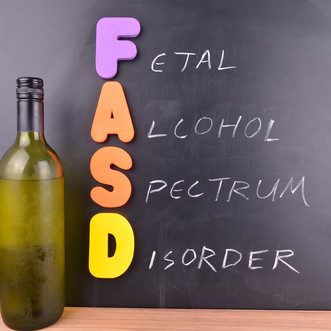
Fetal alcohol spectrum disorder (FASD) describes a lifelong neurodevelopmental condition caused by exposure to alcohol in-utero, with significant impairment in ³3 neurodevelopmental areas (motor skills, neuroanatomy/ neurophysiology, cognition, language, academic achievement, memory, attention, executive function including impulse control and hyperactivity, affect regulation, and adaptive behaviour, social skills, or social communication) BJGP.
What is the scale of the problem?
The UK has the fourth highest estimated prevalence of alcohol use in pregnancy world-wide (DHSC), with FASD affecting around 4% of the UK population (BJGP). Prevalence is even higher in those who have been through the care system, are homeless, or living with addiction problems. SIGN 156 describes the neurodevelopmental disorder related to prenatal alcohol exposure as ‘one of the commonest preventable causes of impairment’.
What can be done in primary care?
Prevention
As there is no established safe level of alcohol consumption during pregnancy, the UK Chief Medical Officers' low-risk drinking guidelines advise that pregnant women should avoid it entirely. Alongside this message, NICE QS204 recommends that health professionals ask about alcohol consumption as part of prenatal care, give clear information on the potential risks including FASD, and offer support to reduce or stop if needed.
Although this all sounds quite straightforward, in practice there can be significant barriers to talking about alcohol use in pregnancy. Women may be worried about the implications of disclosing alcohol use, fearing judgement. As per the DHSC ‘the key is ‘forming a trusting relationship where the person feels able to talk about their alcohol use’. The DHSC guideline points out that those drinking heavily during pregnancy are more likely to be vulnerable and to have experienced trauma, emphasising the need for supportive, holistic and non-judgemental care.
If alcohol use in pregnancy is identified it should be clearly documented, both with a view to providing support for the mother, and also to facilitate early recognition of FASD if it develops.
Supporting diagnosis
Early diagnosis can significantly improve prognosis, allowing access to educational, social and family support. However, evidence suggests that FASD may be underdiagnosed (SIGN 156).
One barrier to diagnosis may be a lack of consideration of prenatal alcohol exposure as a possible cause of neurodevelopmental delay or behavioural difficulties, especially where other diagnoses such as ADHD are present (SIGN 156). It is easy to see how a prenatal alcohol history could be overlooked by clinicians, particularly in an older child or adult. The BJGP encourages us to ‘Actively consider prenatal alcohol exposure as a possible underlying cause for neurodevelopmental delay, or unexplained departures from a typical developmental profile’. Whilst this is an important area to explore, again it needs to be approached with sensitivity and tact, recognising that it may be upsetting for parents to consider.
Those with a history of prenatal alcohol exposure (or physical signs of exposure if a history cannot be obtained) alongside significant physical, developmental or behavioural difficulties should be referred for assessment for FASD according to local pathways (typically via community paediatrics or CAMHS in children). Physical signs of fetal alcohol exposure include the ‘sentinel facial features’, namely simultaneous presence of short palpebral fissures, smooth philtrum and thin upper lip. These are important to recognise, and form part of the diagnostic criteria. However, it is crucial to note that these features are only present in about 10% of cases of FASD (BJGP), meaning that if we rely on facial features alone as a trigger for assessment then we will miss the vast majority of diagnoses.
Any diagnosis should then be clearly documented using new SNOMED CT codes for clarity and consistency (codes released 2024, click here for link to BJGP infographic), with a care plan tailored to the individual’s needs.
In summary, there are many ways that we can potentially impact FASD in primary care, from prevention, to diagnosis, to clear documentation supporting ongoing care. A key learning point is to actively consider FASD in patients presenting with neurodevelopmental delay, routinely taking a prenatal alcohol history, and referring for assessment when the condition is suspected. Crucially, discussions about alcohol need be approached with care and compassion, breaking down barriers to support.
Dr Laura Darby
17th December 2025
Join us at one of our upcoming courses or live webinars



Purchase an NB Plus subscription for unlimited access to the NB Medical digital library
Recent NB Blogs
Need an immediate update? – all our courses are available on demand
Did you find this useful?
You can quickly add CPD to your account by writing a reflective note about the Fetal Alcohol Spectrum Disorder: Keeping it in mind post you've read.
Log in to your NB Dashboard and use the 'Add Reflective Note' button at the bottom of a blog entry to add your note.