Breaking down barriers - what do we need to know about home HPV testing?
NO
PHARMACEUTICAL INFLUENCE
Breaking down barriers - what do we need to know about home HPV testing?
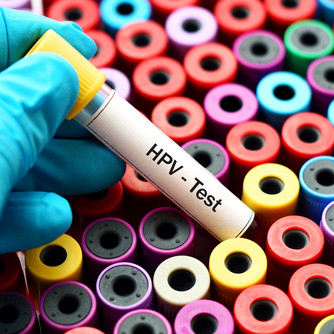
You are doing a pill check for Sehasna, a 34yr old management consultant from Gloucestershire. During the consultation you notice that she has never attended for cervical screening.
On further exploration, Sehasna says ‘To be honest it’s one of those things I’ve been putting off. I’ve always been a bit embarrassed by the idea of having it done, and it’s hard to schedule an appointment now I travel a lot for work. I’ve read that there is a home test available now. Please can I have one of those?’
Sehasna is absolutely not alone, with the latest data showing that nearly 1 in 3 of those eligible for cervical screening are either behind with screening or have never attended (NHS England). The ongoing decline in uptake has driven interest in an alternative test to reach and engage this cohort.
There are many potential barriers to screening, ranging from feeling awkward about the test, childcare requirements (shout out to all those who have experienced the joy of their inquisitive 3 yr old tagging along for the outing…), to those who may find intimate examination triggering for a variety of reasons.
Given this background, there has been keen interest in whether self-testing could broaden access. The London primary care based YouScreen study assessed HPV self-test kits (opportunistically offered to delayed attenders when attending for another reason, in combination with directly mailed kits for prolonged non-attenders), reporting a 1.6% increase in participation. This led to predictions that self-test kits could increase uptake by 400,000 people per year. Further, the UK NSC commissioned HPValidate trial identified a number of self test devices demonstrating almost equivalent sensitivity to clinician samples (albeit taken in a clinical setting).
After considering the evidence in 2025 the UK NSC recommended offering a self-test to delayed attenders (who otherwise may not access testing), but found there is not yet sufficient UK based evidence of parity to clinician-based sampling to open up self-testing to all.
Fast forward to the recent announcement by NHS England of the roll out of home testing!
This will be a gradual roll out of home testing kits across England over the next 12 months. Importantly this is centrally administered and currently ‘invitation-only’, limited to those aged between 30-65yrs old, who have not attended for cervical screening following routine invitation. Eligible patients in England will be contacted by the screening programme and given details of how to request a discrete home test via post. The kit itself contains details of how to take the vaginal swab, and a free post envelope for return. Note there is also a Scottish pilot of self-sampling via specific GP practices, ahead of expected national roll out.
How does home testing differ from clinician-administered cervical screening?
To state the obvious there is no opportunity for visual identification of any cervical abnormalities. Crucially, the home test checks only for HPV. If high-risk HPV is detected through home testing, the patient will be invited to attend clinician-administered cervical screening so that a sample can be sent for cytology.
So, what should we tell Sehasna?
It’s important to explain that whilst access to home HPV testing is a brilliant new development, clinician administered cervical screening remains the recommended test with the strongest evidence base. We could offer her an appointment for cervical screening, whereas she would have to wait to be centrally invited for home testing, introducing potential delays in diagnosis. Further, it’s important that she understands that she would still require a clinician administered cervical screen following home test if positive for high-risk HPV.
On that note, consider that patients invited for cervical screening after a positive home HPV test may have experienced barriers to attending in the first place, raising important questions about how we best support them to access care. The Eve Appeal have a really useful professional guide for supporting patients through cervical screening, including a specific section for patients with extra barriers.
Dr Laura Darby
30th September 2026
Join us at one of our upcoming courses or live webinars



Purchase an NB Plus subscription for unlimited access to the NB Medical digital library
Recent NB Blogs
Need an immediate update? – all our courses are available on demand
Did you find this useful?
You can quickly add CPD to your account by writing a reflective note about the Breaking down barriers - what do we need to know about home HPV testing? post you've read.
Log in to your NB Dashboard and use the 'Add Reflective Note' button at the bottom of a blog entry to add your note.